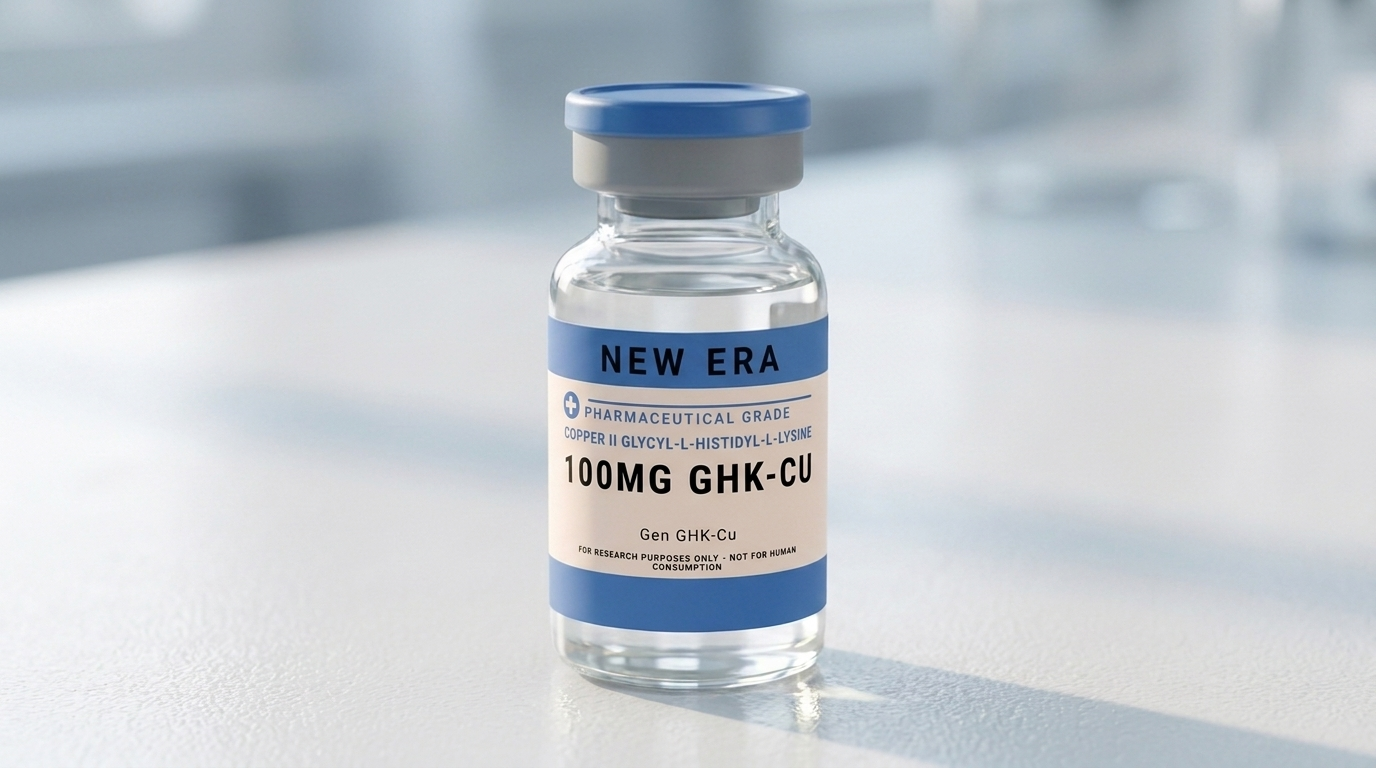
In the world of peptide research, GHK-Cu has built a strong reputation for its wide range of biological interactions. Often referred to as a copper peptide, GHK-Cu is being studied for its potential role in cellular function, skin biology, and regenerative processes.
Naturally occurring in the human body, this peptide has been the focus of scientific research for decades, particularly in areas related to tissue remodeling and cellular signaling.
What Is GHK-Cu?
GHK-Cu is a naturally occurring peptide composed of three amino acids—glycine, histidine, and lysine—bound to a copper ion.
This copper-binding ability is what gives GHK-Cu its unique biological activity. It is found in small amounts in plasma, saliva, and urine, and its levels are known to decline with age.
How GHK-Cu Works
GHK-Cu is being studied for how it interacts with various biological systems at the cellular level.
Cellular Signaling
GHK-Cu is associated in research with:
- Supporting communication between cells
- Influencing gene expression pathways
- Playing a role in cellular maintenance processes
Tissue Remodeling
Studies have explored its involvement in:
- Supporting structural protein activity (such as collagen and elastin)
- Promoting balanced tissue remodeling
- Assisting in maintaining skin structure
Antioxidant Activity
GHK-Cu has also been examined for:
- Its interaction with oxidative stress processes
- Supporting the body’s natural protective responses
- Contributing to cellular stability
Together, these mechanisms make it one of the more versatile peptides being explored in research settings.
Why Researchers Are Paying Attention
GHK-Cu has remained a consistent topic of interest due to its broad range of studied effects.
Skin and Cosmetic Research
A major area of focus has been its role in:
- Supporting skin appearance
- Improving overall skin quality in research models
- Enhancing visible texture and tone
Regenerative Research
GHK-Cu is also being studied for its potential involvement in:
- Tissue repair processes
- Cellular regeneration pathways
- Maintaining healthy biological function
Long-Term Research Interest
Unlike many newer peptides, GHK-Cu has been studied over a longer period, giving researchers a more established base of data to explore.
GHK-Cu vs Other Peptides
Many peptides are designed for very specific targets. GHK-Cu stands out due to its broader range of interactions.
- Targeted peptides → single-function focus
- Growth-related peptides → hormone-driven pathways
- GHK-Cu → multi-functional cellular activity
This versatility is a key reason it continues to be widely researched across multiple areas.
Current Research Landscape
GHK-Cu is still primarily classified within the research space, although it has been included in various experimental and cosmetic-related formulations.
Ongoing research is focused on:
- Understanding its full range of biological interactions
- Exploring optimal delivery methods
- Studying long-term effects in different models
The Future of Copper Peptides
GHK-Cu represents a category of peptides that focus on cellular support and signaling rather than single-pathway targeting.
This direction may contribute to:
- More advanced regenerative research
- Improved understanding of aging-related processes
- Development of more sophisticated peptide-based formulations
Final Thoughts
GHK-Cu continues to stand out due to its naturally occurring origin and wide range of studied biological interactions.
Its long-standing presence in research, combined with ongoing interest, makes it one of the more recognized peptides in the space today.
Important Note
This content is for informational and research purposes only. GHK-Cu is not approved for human consumption or medical use. Always follow applicable regulations and guidelines when working with research compounds.